 BrentDaug
 BrentDaug
Full story
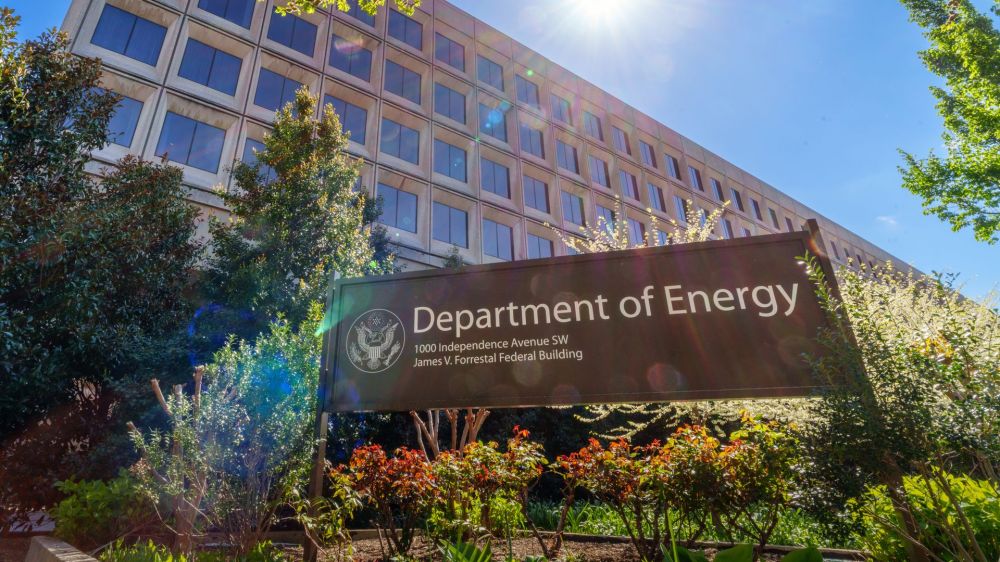
An internal audit at the U.S. Department of Energy will probe whether federal funding cancellations earlier this year were politically motivated. The probe is in response to a Trump Administration action in October that canceled nearly $7.6 billion in energy-related grants designated to 16 Democrat-run states that voted for former Vice President Kamala Harris in the 2024 presidential election.
In a letter to members of Congress, Assistant Inspector General for the DOE Sarah Nelson said the agency’s inspector general office will perform an audit to ”review the Department of Energy’s processes when cancelling financial assistance and whether those cancellations were in accordance with established criteria.”
Under the leadership of Secretary Chris Wright, the energy department rescinded funding opportunities and slashed programs expanded by the Biden administration. Under Biden, the DOE oversaw an influx of funds for clean energy technology — everything from wind and solar to hydrogen fuel, carbon capture and energy efficiency upgrades — but the Trump administration’s policies prioritize oil and gas, coal and nuclear power.
The rollback of previously awarded grant funding has already triggered numerous lawsuits. The inspector general is the DOE’s independent watchdog, and the audit could determine whether some of the most controversial funding cancellations complied with department rules.
Why was the funding canceled?
On Oct. 2, the DOE announced it terminated 321 grants for 223 projects.
“DOE evaluated each of these awards and determined that they did not meet the economic, national security or energy security standards necessary to justify continued investment,” the agency declared in a press release.
Wright said these projects were “rushed through” and the press release stated that 26% of the awards were finalized between Election Day 2024 and President Donald Trump’s inauguration.
Immediately, the DOE faced backlash because the grant recipients, which include state agencies, local governments, universities and energy companies, were exclusively located in 16 states that voted for Harris in 2024 and have Democratic governors: California; Colorado; Connecticut; Delaware; Hawaii; Illinois; Maryland; Massachusetts; Minnesota; New Hampshire; New Jersey; New Mexico; New York; Oregon; Vermont and Washington.
The terminations also came the day after the government shutdown began, fueling accusations that the move was a form of political retaliation.
What industry was hardest hit?
Planned hydrogen hubs on the West Coast faced the largest shortfalls due to canceled federal funds.
Hydrogen fuel has shown promise as an emissions-free fuel source that can power buses and heavy vehicles, maritime shipping and industrial heat applications. Several companies are also developing ways to use hydrogen to run power plants and serve as an alternative aviation fuel.
The hydrogen hubs were a Biden-era initiative to establish seven hydrogen supply chains throughout the country through various corporate and public-private partnerships. The October terminations rescinded $1.2 billion for a California hydrogen hub and $1 billion for a hub in the Pacific Northwest.
A list of proposed project cancellations reported by E&E News included the five other hydrogen hubs, but no additional funding terminations have been announced. The other hydrogen hubs are located in Republican-run states or states that voted for Trump in 2024 such as Pennsylvania, which was awarded a portion of its $750 million in federal funding on Jan. 17, 2025.
How is the funding termination playing out in court?
A lawsuit brought by the city of Saint Paul, Minnesota against Wright alleged that the DOE violated the law by terminating projects only in blue states, treating them differently from similarly situated grantees in Republican-voting states.
Start your day with fact-based news.
Learn more about our emails. Unsubscribe Anytime.
In a legal filing this month, the DOE’s attorneys from the U.S. Department of Justice wrote, “the selection of which DOE grant termination decisions were included in the October 2025 notice tranche was influenced by whether a grantee’s address was located in a State that tends to elect and/or has recently elected Democratic candidates in state and national elections.”
The attorneys said, “consideration of partisan politics is constitutionally permissible, including because it can serve as a proxy for legitimate policy considerations.”
Legal proceedings are ongoing.
The inspector general’s internal audit was announced on Dec. 15. Nelson said the office will provide updates to members of Congress who pushed for the investigation.
Content retrieved from: https://san.com/cc/inspector-general-to-audit-7-6-billion-in-canceled-blue-state-energy-grants/.
 Author's Comment





Have any thoughts?
Share your reaction or leave a quick response — we’d love to hear what you think!
-
 0
0 - 0
- 0
- 0
- 0
- 1